Project
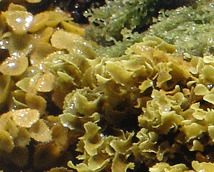
It provides phycologists, the scientific community and the general public with information from the floristic inventory of benthic macroalgae carried out in Los Roques Archipelago National Park, Venezuela.
FONACIT LOCTI-PEI Project No. 2011001216, carried out with funding from the National Fund for Science, Technology and Innovation and the Faculty of Sciences of the Universidad Central de Venezuela, with the support of the Dr. Tobías Lasser Botanical Institute Foundation of Venezuela.
Venezuela has a remarkable diversity of benthic marine algae; however, up-to-date floristic and taxonomic information is lacking for many regions of the country, such as Los Roques Archipelago National Park, whose data are two or three decades old; there is also a lack of geographic data on natural populations and their possible use.
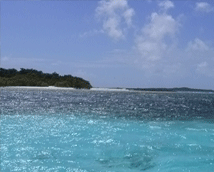
Los Roques Archipelago National Park is one of the most important island areas of Venezuela, mainly from a tourism point of view. It was created by official decree on 18 August 1972 as one of the 7 national parks in a marine environment. It lies north of the central continental coast of Venezuela, about 120 km north of Naiguatá. Its geographic coordinates place it between 11° 44' 45", 11° 48' 36" north latitude and 66° 32' 44", 66° 52' 27" west longitude. It is an archipelago made up of a reef complex and was the first marine-coastal park of Venezuela, covering an area of 221,120 hectares. It consists of about 50 islands forming an oval about 36 km from east to west and 26 km from north to south (Novo 1997).
Very little up-to-date phycofloristic information has been published on this area so far (Albornoz & Ríos, 1965; Ardito & Vera, 1997; Ganesan, 1989; García et al., 2013; Gessner & Hammer, 1967; Gómez, 1998; Gómez et al., 2013 a, Gómez et al., 2013b; Hammer & Gessner, 1967; Rodríguez, 1986b; Rodríguez, 1981; Rodríguez & Saito, 1985; Taylor, 1976; Vera, 1993; Vera et al. 2011). Almost all of the references listed above are specific studies, and few give detailed information on the collection localities.
In general, the phycofloristic information published so far for Venezuela is scarce, considering its 2,800 km of continental coastline and the various islands and archipelagos that make up the marine national parks and the federal dependencies. For the latter, which make up most of our continental shelf, the phycofloristic information is certainly even scarcer. This knowledge, together with environmental knowledge, is essential basic information when undertaking research in other areas such as ecology, ethnobotany, tourism management projects, eco-productive projects or economic investment in coastal areas. This study contributes to one of these basic aspects, the update of the phycofloristic knowledge of this archipelago, and is a general contribution to the study of the benthic marine macroalgae phycoflora of Venezuela.
Results
- More than 900 collection records, reporting 186 species distributed as follows:
- 49 species of the Phylum Chlorophyta
- 30 species of the Phylum Ochrophyta
- 107 species of the Phylum Rhodophyta
- 49 species of the Phylum Chlorophyta
- Twenty (20) of these species are new records, nineteen (19) for Venezuela and one (1) for the Caribbean Sea; they will be available once they have been validly published.
- Creation of the book "Macroalgas Bénticas del Parque Nacional Archipiélago Los Roques, Venezuela. Guía Ilustrada", educational and outreach material available for download at:

Published by EdiCiencias UCV, Academic Coordination, Faculty of Sciences, Universidad Central de Venezuela. Legal Deposit: DC2017001060, ISBN: 978-980-00-2859-9.